
Why Material Selection Matters
Picking the wrong rubber compound is rarely just a leak problem. The flange goes back together, the line is recommissioned, and three weeks later the gasket extrudes into the bore on a thermal cycle nobody flagged.
The most common failure mode in gasket applications isn't poor installation or insufficient bolt load. It's incorrect material selection. An EPDM gasket in a petroleum pipeline will swell and fail within days. A natural rubber seal exposed to ozone will crack within weeks. These are not edge cases; they are fundamental incompatibilities.
Use the comparison table and interactive tool to narrow the field before contacting us for final specification. The decision framework below is the same one our applications engineers work through.
Common Mistake
Specifying by brand familiarity rather than by application environment. "We always use Neoprene" is not an engineering rationale.
Key Principle
No single elastomer is best at everything. Every material is a trade-off: optimised for some environments, unsuitable for others.
Our Approach
We recommend a selection framework driven by the Application Environment: Temperature first, then media, then pressure.
Workshop Note
One of the most frequent conversations we have with customers involves temperature derating. The maximum temperatures listed in this guide assume continuous service with no chemical exposure. In practice, we always recommend selecting a material rated at least 15 to 20 °C above your maximum expected operating temperature. When chemical exposure is combined with elevated temperature, the effective limit drops further. At elevated pressures, effective temperature limits may also be lower; see our Pressure-Temperature Ratings guide for combined PT limits. Our applications engineers can help you determine the true working limit for your specific combination of temperature and media.
Selection Framework
Evaluate your requirements in this priority order. Each step eliminates materials that cannot survive the environment, narrowing the field to viable candidates.
What are the minimum and maximum continuous service temperatures? This single factor immediately eliminates the majority of candidates.
What fluid, gas, or chemical will the gasket contact? This is the single most common cause of premature gasket failure when ignored.
Operating pressure determines required hardness. High pressures need harder durometers (70–90A) or fabric reinforcement to resist extrusion.
Quick Material Selector
Answer two questions to get a shortlist. Not a substitute for full specification; a starting point.
What is the operating temperature environment?
What is the primary contact media?
Recommended Materials
Click a result to highlight it in the comparison table below. Scores are indicative. Always verify against specific chemical compatibility data.
Property Comparison
The table below compares all 10 elastomers across eight functional properties, temperature range, FDA status, and relative cost. Click any material row to highlight it across this page. Ratings: Excellent, Good, Fair, Poor.
Ratings represent typical compound performance. Actual results depend on specific formulation, filler loading, and operating conditions. Always verify critical specifications against the manufacturer's data sheet.
Temperature Range Map
Continuous service temperature ranges for all 10 elastomers. Click a material row above or a bar below to highlight.
Workshop Note
We stock all six primary elastomers (Natural Rubber, Neoprene, Nitrile, EPDM, Silicone, and Viton) in our Sydney facility, and can typically cut custom gaskets same-day on standard materials. We'd rather catch it now than diagnose it later. If you're unsure which material to choose, send us your operating conditions and we'll typically provide a recommendation within one business day. Our team has decades of experience matching elastomers to Australian industrial applications across water treatment, mining, food processing, and petrochemical.
Material Profiles
Expand any material for detailed engineering data, trade names, and application guidance.
Classification
ASTM D2000: AA
Commodity grade. SMR, RSS, pale crepe
Mechanical Properties
Hardness: 30–90 Shore A | Tensile: 7–25 MPa
Elongation: 300–700% | SG: 1.1–1.5
Strengths
- + Highest tensile & tear of any general-purpose elastomer (strain crystallisation)
- + Outstanding vibration damping and dynamic fatigue resistance
- + Low compression set with strong elasticity recovery
- + Excellent rebound resilience even at sub-zero temperatures
Weaknesses
- − Degrades rapidly in ozone / UV; unsuitable for outdoor exposure
- − Poor resistance to petroleum oils, fuels, or hydrocarbon solvents
Primary Applications
Vibration mounts, conveyor covers, wear liners, mining screens, dock fenders, general water/air gaskets
Classification
ASTM D2000: BC / BE
Neoprene (DuPont / Denka), Baypren (Lanxess)
Mechanical Properties
Hardness: 30–90 Shore A | Tensile: 7–17 MPa
Elongation: 200–600% | SG: 1.3–1.7
Strengths
- + Best all-round balance: moderate resistance across most environments
- + Inherent flame resistance (self-extinguishing) from chlorine content
Weaknesses
- − Not suitable for concentrated mineral oils or aromatic solvents
- − Moderate compression set; inferior to NR and EPDM for long-term static sealing
- − Higher cost than NR or SBR for equivalent general-purpose applications
- − Adhesion to metals depends on surface prep; bonded assemblies often need a primer
Primary Applications
General-purpose gaskets, refrigeration seals, bridge bearings, weather seals, cable jacketing, expansion joints
Classification
ASTM D2000: BF / BG / BK
Buna-N, Perbunan (Lanxess), Nipol (Zeon)
Mechanical Properties
Hardness: 30–90 Shore A | Tensile: 7–20 MPa
Elongation: 200–600% | SG: 1.2–1.5
Strengths
- + Industry-standard material for petroleum oil, fuel, and hydrocarbon resistance
- + Oil resistance is tuneable via ACN content (higher ACN = better oil resistance)
- + Good mechanical properties and abrasion resistance at moderate cost
Weaknesses
- − Poor ozone, UV, and weathering resistance; not for outdoor use
- − Not resistant to polar solvents (ketones, esters) or chlorinated solvents
- − Poor flame resistance
Primary Applications
Hydraulic seals, fuel system gaskets, oil-resistant hoses, petroleum refinery gaskets, pneumatic seals
Classification
ASTM D2000: BA / CA / DA
Nordel (Dow), Keltan (Arlanxeo), Vistalon (ExxonMobil)
Mechanical Properties
Hardness: 40–90 Shore A | Tensile: 7–21 MPa
Elongation: 300–600% | SG: 1.1–1.5
Strengths
- + Outstanding weather, ozone, and UV resistance; premier outdoor elastomer
- + Strong steam and hot water resistance; first choice for water systems
- + Very good resistance to dilute acids, alkalis, ketones, alcohols, and glycols
- + Holds compression set well in static gasket service over long deployments
Weaknesses
- − Completely incompatible with petroleum oils, fuels, and hydrocarbons
- − Only fair tear strength compared to NR and CR
Primary Applications
Potable water gaskets, steam seals, roofing membranes, automotive cooling, weather seals, brewery / dairy equipment
Classification
ASTM D2000: GE
Silastic (Dow), Elastosil (Wacker), Silopren (Momentive)
Mechanical Properties
Hardness: 20–80 Shore A | Tensile: 4–11 MPa
Elongation: 100–700% | SG: 1.1–1.4
Strengths
- + Widest continuous temperature range of any common elastomer (-60 to +230 °C)
- + Primary FDA / food-contact material: physiologically inert, odourless, tasteless
Weaknesses
- − Very low tensile strength, tear resistance, and abrasion resistance
- − Poor resistance to hydrocarbon fuels, aromatic solvents, concentrated acids
- − High cost and easily damaged during installation (nicks and tears)
- − Compression set drifts upward in long high-temperature exposure
Primary Applications
Food / beverage gaskets, pharmaceutical seals, oven door seals, medical devices, high-temp ductwork, LED lighting seals
Classification
ASTM D2000: HK
Viton (Chemours), Fluorel (3M), Tecnoflon (Solvay), Dai-El (Daikin)
Mechanical Properties
Hardness: 60–90 Shore A | Tensile: 7–17 MPa
Elongation: 150–300% | SG: 1.8–2.0
Strengths
- + Very broad chemical resistance: resists petroleum oils, fuels, aliphatic solvents, and most mineral acids; outperformed only by FFKM in strong oxidiser services
- + High-temperature rated (continuous to 205 °C)
- + Outstanding aging, ozone, and weather resistance; very long service life
Weaknesses
- − Very high cost (5–10× the price of NBR or EPDM per kilogram)
- − Poor resistance to steam, hot water, ketones, esters, and amines
- − Limited low-temperature flexibility (standard grades stiffen below -15 °C)
Primary Applications
Chemical plant gaskets, petroleum refinery seals, aerospace fuel systems, semiconductor manufacturing, exhaust gaskets
Classification
ASTM D2000: CE / DE
Hypalon (discontinued brand), Toso-CSM (Tosoh)
Mechanical Properties
Hardness: 45–95 Shore A | Tensile: 7–17 MPa
Elongation: 200–500% | SG: 1.3–1.8
Strengths
- + Resists concentrated sulphuric acid and most oxidising acids; a capability most elastomers lack
- + UV and weather resistance with strong colour stability
- + Good flame resistance (self-extinguishing)
- + Retains pigment over decades of outdoor exposure where most elastomers chalk or fade
Weaknesses
- − Poor compression set limits long-term static sealing applications
- − Poor resistance to aromatic and chlorinated solvents; the original Hypalon brand was discontinued by DuPont, so availability is now more limited
Primary Applications
Chemical plant linings, acid-resistant gaskets, roofing membranes, power cable sheathing, nuclear industry seals
Classification
ASTM D2000: AA / BA
Exxon Butyl (ExxonMobil), Lanxess Butyl (Arlanxeo)
Mechanical Properties
Hardness: 40–75 Shore A | Tensile: 7–17 MPa
Elongation: 300–600% | SG: 1.1–1.3
Strengths
- + Lowest gas permeability of any common rubber; ideal for vacuum and gas-holding
- + Highest vibration damping of any elastomer at low frequencies
- + Very good resistance to ozone, weathering, dilute acids, and alkalis
Weaknesses
- − Poor resistance to petroleum oils, fuels, and hydrocarbons
- − Only fair abrasion resistance and compression set
- − Difficult to bond to metals without halogenated grades (CIIR / BIIR)
Primary Applications
Pharmaceutical stoppers, vacuum seals, vibration damping pads, gas-holding membranes, tank linings, inner tubes
Classification
ASTM D2000: BG
Adiprene (Lanxess), Vulkollan (Covestro), Estane (Lubrizol)
Mechanical Properties
Hardness: 60A–75D Shore A | Tensile: 20–50 MPa
Elongation: 300–700% | SG: 1.05–1.25
Strengths
- + Highest tensile strength of any elastomer (up to 50 MPa); 2–5× the strength of other rubbers
- + Outstanding abrasion resistance; outlasts conventional rubbers by 5–10× in mining and conveyor service
Weaknesses
- − Poor resistance to hot water, steam, and prolonged moisture (hydrolysis)
- − Relatively narrow upper temperature limit (80 °C continuous)
- − Degraded by strong acids, bases, and polar solvents
- − Higher cost per kilogram than NR or NBR despite the longer service life
Primary Applications
Mining wear liners, conveyor scrapers, industrial rollers, heavy-duty wheels, hydraulic seals (low temp), print rollers
Classification
ASTM D2000: AA
Buna S, Ameripol, Plioflex (often sold generically as 'SBR')
Mechanical Properties
Hardness: 40–90 Shore A | Tensile: 5–15 MPa
Elongation: 200–500% | SG: 1.1–1.6
Strengths
- + Lowest cost; the most economical sheet rubber available
- + Good abrasion resistance for flooring and matting applications
- + Consistent quality as a synthetic (not subject to NR crop variability)
Weaknesses
- − Inferior to NR in tensile, tear, resilience, and compression set
- − Poor resistance to oils, fuels, ozone, UV, and weathering
- − Narrowest upper temperature range of common elastomers
Primary Applications
General-purpose gaskets (water / air), industrial flooring, carpet underlay, anti-vibration pads (cost-driven)
Common Failure Modes
When the wrong material is selected, failure is predictable. Recognise these patterns to avoid them.
Chemical Attack / Swell
Cause: Selecting a material incompatible with the service media — e.g. EPDM in petroleum oil, NBR outdoors.
Prevention: Always verify chemical compatibility against the specific fluid, concentration, and temperature.
Compression Set Failure
Cause: Gasket permanently deforms under sustained load and no longer exerts sufficient sealing force against flange faces. Often missed because the gasket still looks intact.
Prevention: Select materials with low compression set (NR, EPDM, VMQ, FKM) for long-term static seals.
Thermal Degradation
Cause: Operating above the material's maximum continuous service temperature.
Prevention: Select material rated at least 10–20 °C above the maximum expected operating temperature.
Ozone / UV Cracking
Cause: Using ozone-sensitive materials (NR, SBR, NBR) in outdoor or ozone-rich environments.
Prevention: Use EPDM, VMQ, FKM, CSM, or CR for outdoor applications or near ozone sources.
Extrusion
Cause: Material too soft for operating pressure, or flange gap too wide — gasket squeezes out.
Prevention: Select higher durometer (70–90A) for high-pressure; use fabric-reinforced sheet; reduce flange gap.
Hydrolysis
Cause: Moisture-sensitive materials (AU, FKM) exposed to hot water or steam break down chemically.
Prevention: Use EPDM or IIR for steam service. Never use FKM or polyurethane in saturated steam, even briefly.
Workshop Note
The most dangerous assumption we encounter is "it looks fine, so it must be fine." Elastomer degradation often starts internally before visible surface signs appear. We've cut open gaskets that looked perfect on the outside but were completely hardened or swollen through the cross-section. If a gasket has been in service beyond its expected life or has been exposed to conditions outside its rated envelope, replace it. Don't rely on a visual inspection alone. When in doubt, send us the old gasket and we can assess it.
Standards & Our Policy
Universal Gaskets: Material Capability
Australian manufacturer & stockholder
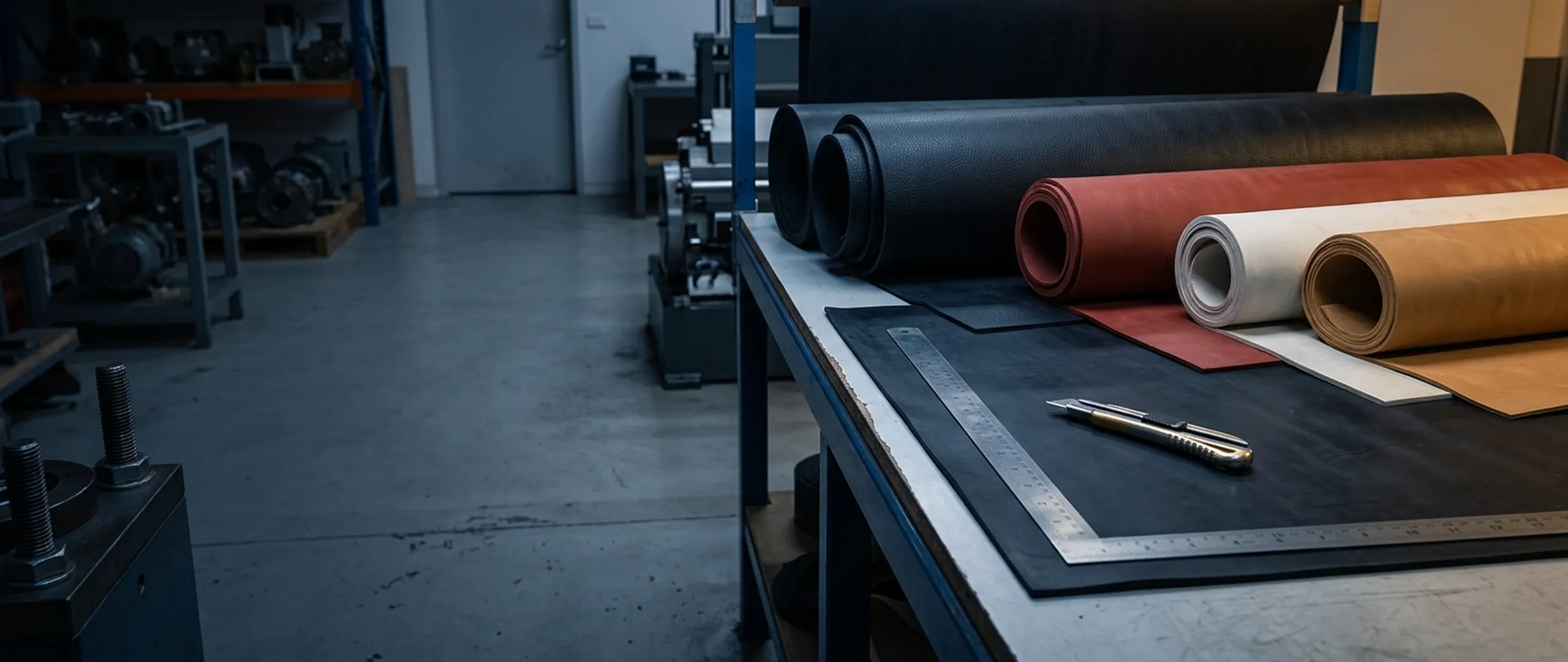
We stock all core elastomers (Natural Rubber, Neoprene, Nitrile, EPDM, Silicone, and Viton) across multiple thicknesses and hardnesses, including FDA-compliant and fabric-reinforced grades. Speciality materials (Hypalon, Butyl, and Polyurethane) are available on short lead times.
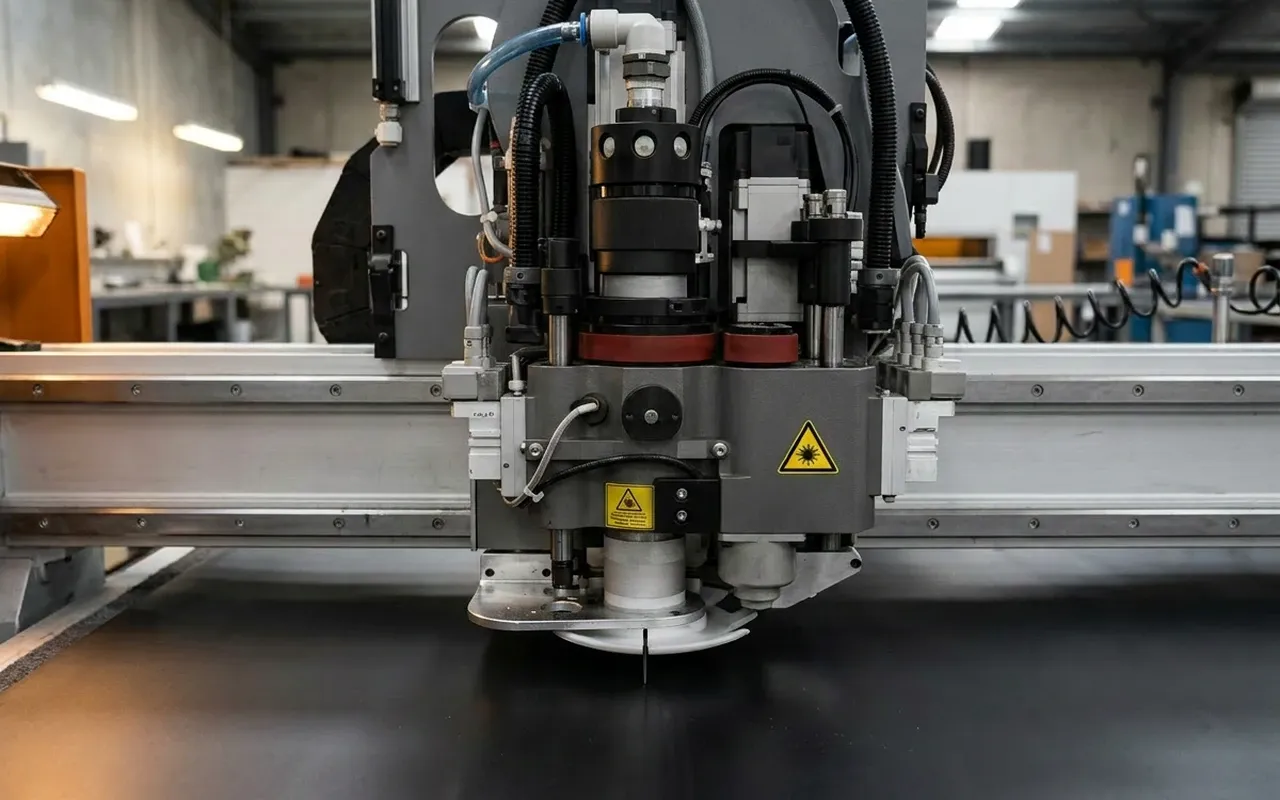
Using high-precision CNC cutting machinery, we can typically produce custom gaskets from stocked sheet rubber with same-day turnaround when the material is in stock.
If you're unsure which material is right for your application, contact our applications team. We'll review your operating conditions and recommend the right elastomer, not just what we have on the shelf.
Explore Further
Disclaimer
This guide is provided for general engineering reference only and does not constitute professional advice, specification, or guarantee of performance. Actual results depend on specific application conditions. Universal Gaskets Pty Ltd accepts no responsibility or liability for decisions made based on this information. For full terms, see our Terms & Conditions.
Property ratings and temperature ranges represent typical values for commercially available filled/compounded sheet rubber grades at standard conditions. Actual performance depends on specific formulation, filler loading, curing system, and the combination of environmental factors. Simultaneous chemical exposure and elevated temperature can drastically alter behaviour. Always verify critical specifications against the manufacturer's data sheet for the specific compound being supplied.